Oliver Page
Case study
December 12, 2025
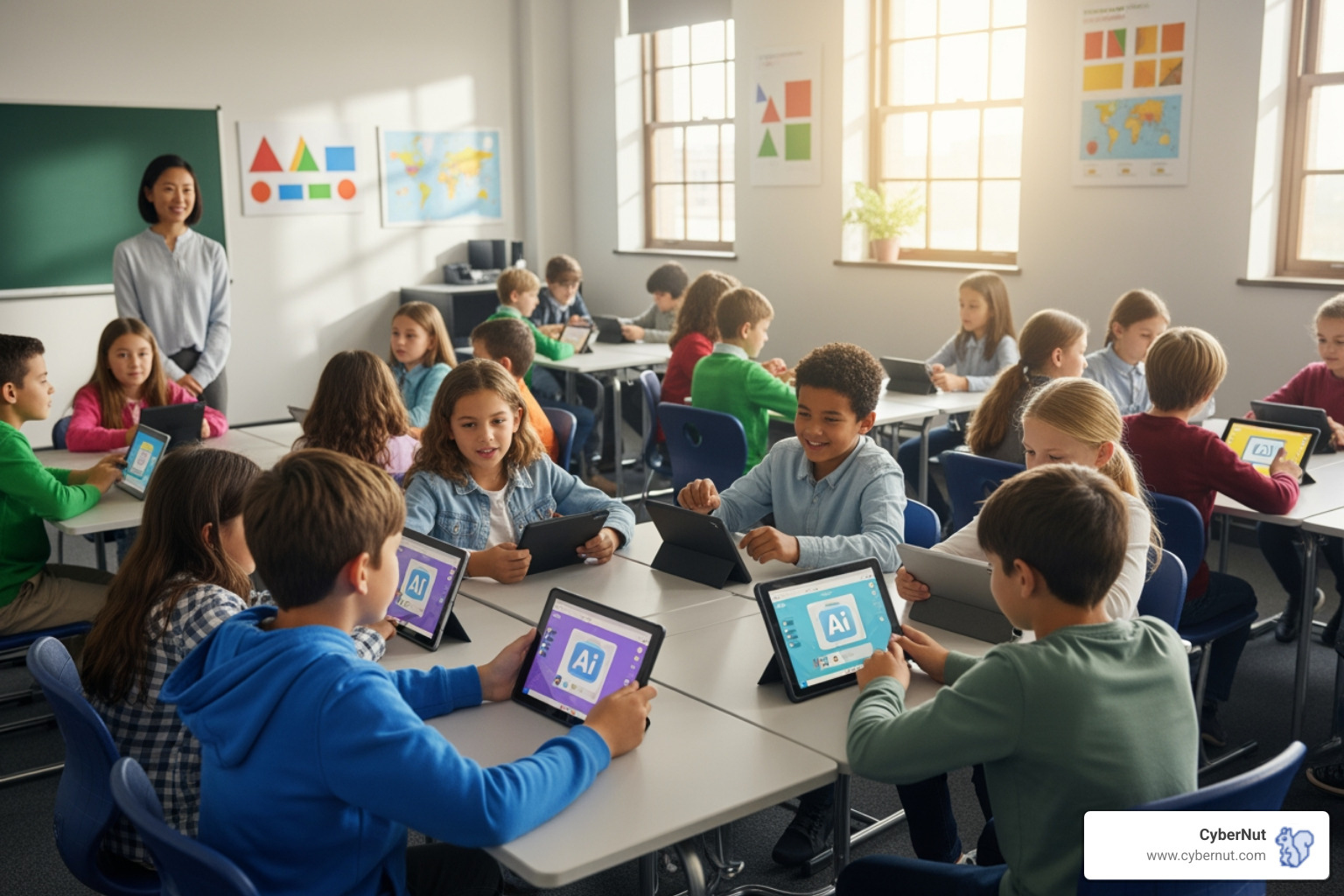
Managing AI Risk Without Slowing Innovation in Schools requires a strategic approach that balances three critical elements:
The numbers tell a stark story about where K-12 schools stand today. 86% of schools now allow students to use AI tools, and 91% permit faculty use. That's the good news. The challenging part? 41% have already reported AI-related cyber incidents, including phishing attacks, deepfake content created by students, and misinformation campaigns. Yet only 32% of institutions feel "very prepared" to handle AI-related threats over the next two years.
This gap between adoption and preparedness creates what many educators call the "Wild West" of AI in education. Schools are caught between two competing pressures: the fear of falling behind technologically and the fear of exposing students to new risks.
But here's what the research shows clearly: the biggest risk is doing nothing. Schools that wait for perfect solutions or comprehensive regulations will find themselves unprepared as AI becomes increasingly embedded in every aspect of education and society.
AI offers real benefits for K-12 schools. It can reduce the 11 hours teachers spend weekly on preparation down to six. It can personalize learning for students who struggle or need acceleration. It can help students with disabilities access content in new ways. And it can prepare students for a workforce where AI literacy will be essential.
The challenge isn't whether to adopt AI. It's how to do it responsibly while keeping innovation moving forward.

Know your Managing AI Risk Without Slowing Innovation in Schools terms:
As AI becomes deeply embedded in our educational systems, we must first understand the primary risks it introduces. These aren't just theoretical concerns; they are real challenges that schools across the nation are already facing. From safeguarding student data to maintaining academic integrity, the impact of AI is broad and complex.

At the forefront of these risks are concerns around data privacy and cybersecurity, academic integrity, algorithmic bias, and the potential for over-reliance on AI. These challenges are especially acute in K-12 education, where the privacy of minors is paramount and developmental impacts must be carefully considered. Student data protection laws such as the Family Educational Rights and Privacy Act (FERPA) and the Children's Online Privacy Protection Act (COPPA) add crucial layers of protection that AI systems must respect.
The statistics are sobering: 41% of schools have already reported AI-related cyber incidents. These aren't just minor glitches; they include serious threats like phishing, misinformation campaigns, and harmful deepfake content created by students. Alarmingly, 30% of institutions reported students producing harmful AI content, such as deepfake impersonations, while 11% experienced disruptions from AI-driven phishing or misinformation. These numbers highlight a critical truth: AI boosts cyberattacks, making them more sophisticated and harder to detect.
Our concerns mirror those of 90% of respondents in recent surveys, with student privacy violations (65%), learning disruption (53%), and deepfake impersonation (52%) topping the list. The rapid adoption of AI has created a new threat landscape that many schools feel ill-equipped to handle, with only 32% feeling "very prepared" for the next two years.
This environment means we must be vigilant against "shadow AI," where unvetted tools bypass school policy, potentially exposing sensitive student data. We've explored these evolving threats in depth, from AI-Powered Cyber Threats in K-12: Why Schools Face Higher Risks in 2025 to the unsettling reality of Deepfake Principals and Synthetic Students: The Next Wave of School Cyber Threats. These incidents underscore the urgent need for robust cybersecurity measures and comprehensive training.
AI tools like ChatGPT have sparked a critical debate around academic integrity. Students are using AI for research (62%), brainstorming (60%), and language support (49%). While these can be legitimate learning aids, they also present opportunities for outsourcing cognitive effort and AI-powered cheating. The challenge for educators is to redefine plagiarism and academic honesty in an AI-infused world.
The reliance on AI detection tools is widespread, yet only 26% of respondents believe them to be "very reliable." This low reliability, coupled with high rates of false positives, means we cannot solely depend on these tools. Instead, we must shift our assessment methods, focusing on fostering critical thinking, creativity, and the "productive struggle" that is essential for deep learning. As we discussed in From Essays to Exploits: What AI Means for Cybersecurity in the Classroom, the implications of AI extend far beyond essays. We must teach students how to use AI responsibly as a tool, not as a shortcut.
Beyond academic and cybersecurity concerns, AI introduces unique psychological and developmental risks, particularly for children. AI systems are designed to mimic empathy and emotional understanding, which can be beneficial in tutoring and behavioral support. However, this also brings serious risks, especially for children. Emotional attachment to AI companions can blur boundaries, displace human relationships, and potentially weaken social connections. A recent survey found that nearly 3 in 4 teens have used AI companions, highlighting the widespread nature of this phenomenon and the need for careful consideration of its impact.
The potential for over-reliance on AI can also impact the development of critical thinking skills and independent problem-solving. We need to ensure that AI complements, rather than supplants, human interaction and cognitive development. Balancing the allure of AI with the imperative to foster healthy social and intellectual growth is a delicate task for schools and parents alike.
Managing AI Risk Without Slowing Innovation in Schools demands a proactive, structured approach. We can't simply react to each new AI development; we need a comprehensive framework that anticipates challenges while embracing opportunities. This framework involves developing robust policies, carefully vetting AI tools, fostering open communication, and establishing clear accountability.

Many districts are still in the early stages of figuring out how to integrate AI. While 51% have detailed AI policies, 53% still rely on informal guidance. This highlights a significant policy gap that needs to be addressed. Organizations like TeachAI and CoSN have led the way with guides to help district leaders steer AI implementation, and at least 28 states have published guidance on AI in K-12 settings. This growing body of resources provides a solid foundation for schools to build their own strategic frameworks.
Effective AI policy isn't a one-and-done document; it's a living framework that balances guardrails with flexibility. These policies should cover:
A comprehensive AI policy should include key components such as:
Resources like AI Policy Guidance for Schools can serve as excellent starting points for developing these essential documents. It's not about creating rigid rules that stifle innovation, but about establishing clear expectations that empower responsible experimentation.
The proliferation of AI tools means schools must implement robust vetting processes before introducing new technologies into classrooms. This is crucial for preventing "shadow AI," where unvetted tools enter classrooms and bypass school policy, as we've highlighted in our blog Shadow AI: How Unvetted Tools Enter Classrooms and Bypass School Policy.
Our vetting strategy should include:
This meticulous approach ensures that we introduce AI tools that are not only innovative but also safe, ethical, and aligned with our educational goals.
Successful AI integration is a community effort. We must foster open and transparent communication with parents and the wider community about our use of AI. This is vital for building trust and ensuring broad support for our initiatives. The EdWeek article, 8 Tips for Schools to Avoid Chaos in the Age of AI, emphasizes the importance of this dialogue.
Strategies for effective communication include:
By engaging our community proactively, we can explain AI, address misinformation, and collaboratively shape an AI-ready learning environment that everyone trusts.
At the heart of Managing AI Risk Without Slowing Innovation in Schools lies our most valuable asset: people. Technology, no matter how advanced, is only as effective as the humans who wield it. Therefore, empowering our students, teachers, and staff with the knowledge and skills to steer AI responsibly is paramount.
This human-centered approach includes robust professional development, comprehensive AI literacy initiatives, and ensuring that humans remain "in the loop" for critical decisions. As we emphasize in Preparing School IT Teams for the AI-Infused Threat Landscape, preparing our teams is not just about technology, but about human readiness.
AI literacy is not merely a buzzword; it's the foundational skill set for the 21st century. It encompasses the knowledge, skills, and attitudes needed to understand how AI works, its capabilities and limitations, its ethical implications, and how to use it responsibly. The EU AI Act directly endorses AI literacy as a core objective, and organizations like the National AI Advisory Committee (NAIAC) and the Bipartisan Policy Center stress its growing importance.
For students, AI literacy means:
For educators, AI literacy means:
We must infuse AI concepts across the curriculum, not just relegate them to computer science classes. This ensures that all students develop the competencies needed to thrive in an AI-powered world. Our blog, Digital Literacy: Cyber Literacy: Teaching Students to Navigate AI Tools Safely, provides further insights into this crucial area, complementing resources like UNESCO's Guidance for generative AI in education and research.
Teachers are at the forefront of AI integration, yet many feel unprepared. A staggering 33% of teachers cited that their district hasn't established an appropriate AI policy as a reason for not using AI tools. This points to a clear need for effective professional development (PD).
Our PD programs should:
This kind of comprehensive PD is essential not only for leveraging AI's educational benefits but also for protecting our schools from AI-powered threats, as discussed in Preparing Teachers and Staff for AI-Powered Phishing in Schools. By investing in our educators, we invest in a more secure and innovative future for our students.
The true promise of AI in education extends far beyond simply optimizing existing processes. While AI can undoubtedly make grading faster or generate worksheets more efficiently, the real opportunity lies in fundamentally rethinking what education looks like in an AI-powered world. This shift is critical for Managing AI Risk Without Slowing Innovation in Schools, ensuring we leverage AI to prepare students for a future that is rapidly evolving.
The distinction between optimizing the old model and rethinking for the future is crucial. Merely automating tasks within an outdated educational framework risks perpetuating its limitations. Instead, we should view AI as a catalyst for change.
Optimizing the Old Model (Efficiency Focus) involves using AI for:
Rethinking for the Future (Transformative Focus) involves using AI to:
This means shifting our focus from content delivery to skill development. In an age where AI can access and synthesize vast amounts of information, the ability to think critically, solve complex problems, collaborate effectively, and adapt to new challenges becomes paramount. AI can be an invaluable partner in cultivating these skills, freeing up teachers to act as mentors and guides.
As we accept AI, we must actively work to prevent the widening of existing educational disparities. The "digital divide" - disparities in access, use, and design of technology - could be exacerbated by AI if not addressed proactively. As our blog AI and Equity: Cybersecurity Risks in Algorithmic Bias and Access explores, algorithmic bias and unequal access present significant cybersecurity risks and ethical challenges.
To ensure equitable access, we must:
By making equity a core tenet of our AI strategy, we ensure that AI serves as a tool for empowerment and inclusion, rather than a new source of disparity.
We understand that Managing AI Risk Without Slowing Innovation in Schools can raise many questions. Here are some of the most common inquiries we encounter, along with our insights.
It's natural to feel overwhelmed when starting from scratch. We recommend beginning with a multi-stakeholder task force that includes teachers, administrators, IT staff, parents, and even students. This ensures diverse perspectives and buy-in. Review guidance from reputable organizations like TeachAI and your state's Department of Education, as many states have now published resources. Focus on establishing adaptable principles and clear guidelines for ethical and responsible use, rather than attempting to ban specific tools outright. The goal is to guide, not to stifle.
While many risks exist, AI-boosted phishing attacks are arguably the most significant cyber risk for schools today. These attacks leverage AI to create highly personalized, convincing, and harder-to-detect phishing emails and messages. They can target staff and students alike, aiming to gain network access, steal sensitive data, or deploy ransomware. Our internal research, detailed in AI Supercharges School Cyberattacks: Districts Pivot to Verification Drills and AI-Aware Training, indicates a growing sophistication in these threats. The human element remains the weakest link, making robust cybersecurity training and awareness critical.
No, the consensus among educators and experts, including the U.S. Department of Education, is that AI will augment, not replace, teachers. AI can automate many administrative tasks, freeing up valuable teacher time. It can provide data for personalized instruction, offer individualized tutoring support, and even help teachers differentiate content for diverse learners. This allows teachers to focus on high-impact activities like mentoring, fostering critical thinking, and building meaningful relationships with students. However, it's also true that teachers who effectively use AI will likely be more in demand and more effective than those who do not. AI empowers educators to do their jobs better, not to be replaced by a machine.
The journey of integrating AI into education is a marathon, not a sprint. It requires a delicate balance of embracing innovation while proactively Managing AI Risk Without Slowing Innovation in Schools. By establishing a strong framework of adaptable policies, fostering widespread AI literacy among all stakeholders, and committing to equity in access and implementation, schools can open up AI's transformative potential to improve learning outcomes and prepare students for the future.
The biggest risk, as many experts agree, is not moving too fast, but doing nothing at all. In this rapidly evolving landscape, building a culture of cybersecurity awareness is the ultimate safeguard.
At CyberNut, we understand the unique cybersecurity challenges K-12 schools face, especially with the rise of AI-powered threats like sophisticated phishing attacks. Our custom, low-touch, and engaging cybersecurity training programs, focusing on phishing awareness, are designed to equip your staff and students with the resilience needed to steer this new era safely.
To understand your district's current AI-driven threat readiness and bolster your defenses, we invite you to request a free phishing audit to assess your district's current AI-driven threat readiness. Let us help you cultivate a secure and innovative learning ecosystem where AI can flourish responsibly.
Oliver Page
Some more Insights


Back
.png)
.png)

.png)
.png)
.png)
.png)