Oliver Page
Case study
November 19, 2025
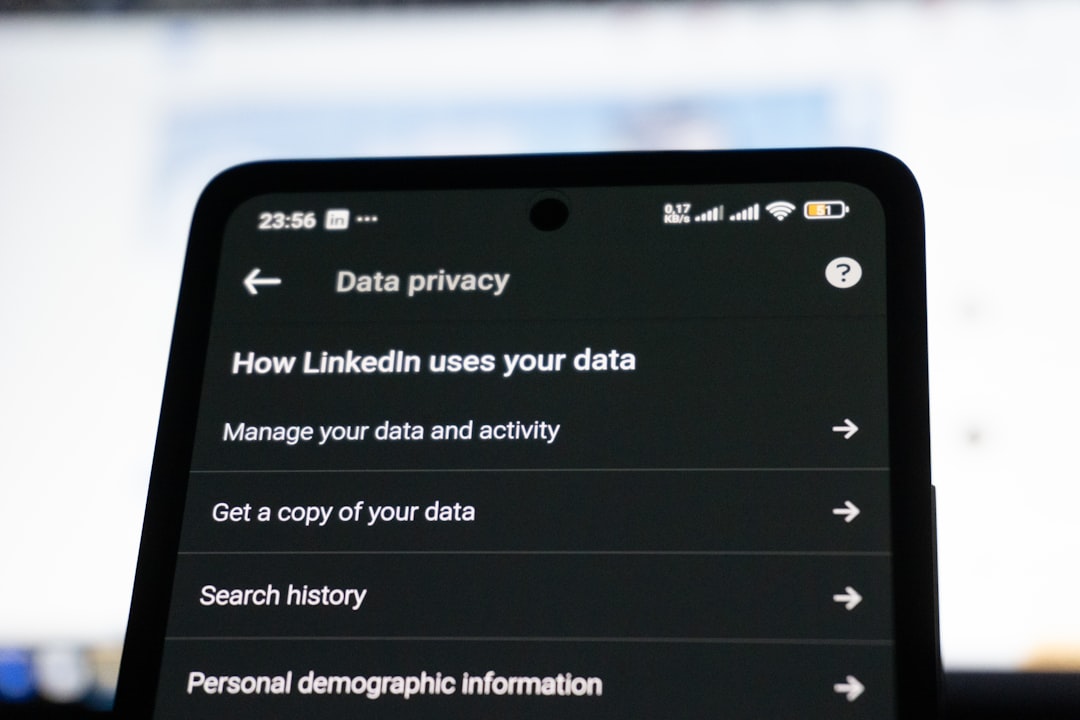
Vendor Compliance 2026 Checklist: Evaluating EdTech Vendors Under New Privacy Laws is a critical priority for K-12 IT directors as schools face mounting legal requirements and scrutiny over student data protection. If you're evaluating EdTech vendors, here's what you need to know.
Quick Compliance Checklist:
Your school district relies on dozens of EdTech tools that handle sensitive student data. The problem is that compliance is no longer optional, and it's getting more complex.
Since 2014, nearly 400 student privacy bills have been introduced across 49 states. California's laws alone require specific contract language that many vendors still don't meet. By 2026, larger companies will face mandatory annual cybersecurity audits under CCPA. Non-compliance can trigger fines up to $7,500 per violation.
SETDA's 2025 EdTech Quality Indicators Guide lists "Safe"—student data privacy and security—as the very first pillar for district EdTech adoption. Districts are now disqualifying vendors during procurement if compliance gaps exist. One missing certification or vague policy can kill a deal before it starts.
This isn't about adding more work; it's about protecting your students and avoiding legal liability. The good news is that a systematic evaluation framework makes vendor vetting manageable, even with limited resources.
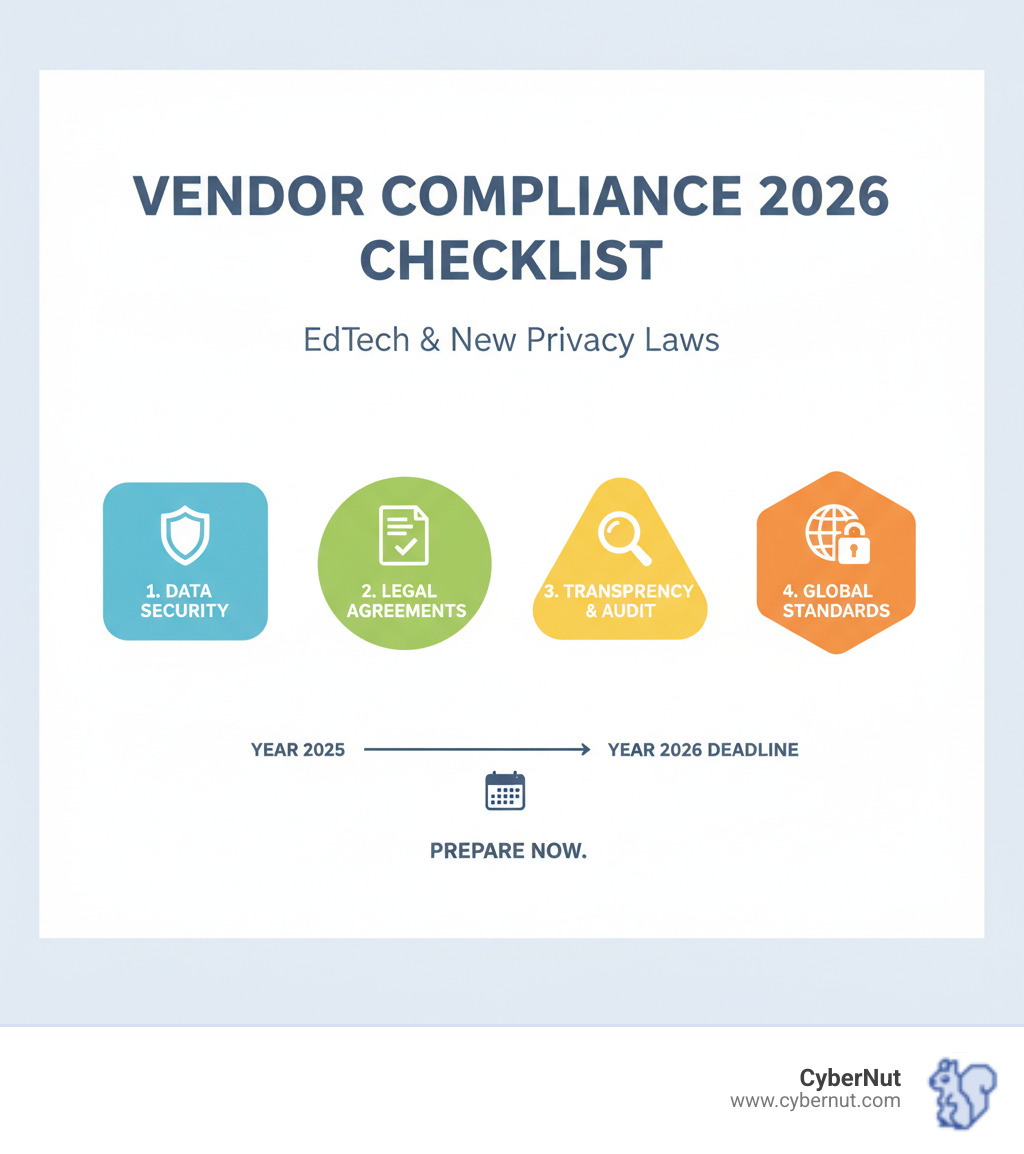
Vendor Compliance 2026 Checklist: Evaluating EdTech Vendors Under New Privacy Laws definitions:
As technology advances, so do the laws designed to protect student data. As we head toward 2026, understanding this legal landscape is essential for building trust and ensuring a safe digital learning environment.

This intersection of law and technology means we must be more mindful than ever. From federal rules to specific state requirements, these regulations create a more secure digital space for students. To learn how we tackle these challenges, you can explore More info about our privacy services.
Two foundational federal laws are FERPA and COPPA. Applying them to modern EdTech requires careful thought.
The Family Educational Rights and Privacy Act (FERPA) gives parents rights regarding their children's education records. For EdTech, the "school official exception" is critical. It allows schools to share data with vendors performing tasks that school employees would normally do. However, the vendor must be under the school's direct control, use the data only for its educational purpose, and maintain confidentiality. This is a key part of the Vendor Compliance 2026 Checklist: Evaluating EdTech Vendors Under New Privacy Laws. For more, see All About FERPA: The Federal Student Privacy Law That Still Matters in 2025.
The Children's Online Privacy Protection Act (COPPA) focuses on collecting personal information online from children under 13. COPPA requires websites and online services to get verifiable parental consent before collecting, using, or sharing personal information from these younger children. EdTech vendors whose tools are used by elementary students must have clear processes for obtaining this consent. More details are available from the FTC about The Children's Online Privacy Protection Act (COPPA).
While federal laws provide a baseline, states have added their own layers of student data privacy protection, creating a complex patchwork of rules.
California's AB 1584 (Education Code § 49073.1) is a game-changer, mandating nine specific contract clauses in all agreements between schools and EdTech vendors. These clauses ensure that schools own student data, vendors cannot use data for advertising, and there are clear procedures for data security and deletion. To understand this law, read California's AB 1584: What Schools Must Know About Digital Contracts with EdTech Vendors.
California's Student Online Personal Information Protection Act (SOPIPA) complements AB 1584 by defining what vendors cannot do, such as using data for targeted advertising, selling it, or creating student profiles for non-educational purposes.
The broader California Consumer Privacy Act (CCPA) impacts EdTech vendors meeting certain size thresholds (e.g., over $26.6M annual revenue). Under CCPA, consumers have rights to know what data is collected and request its deletion. A major change for 2026 is that larger companies under CCPA will face mandatory annual cybersecurity audits.
In the east, New York's Education Law §2-d improves protection for personally identifiable information (PII). It requires schools to use the NIST Cybersecurity Framework, appoint a data protection officer, and include specific contract clauses with vendors. Learn more with All About New York's Education Law 2-D: Student Data Privacy Explained.
As the Student Privacy Compass' Guide to State Laws shows, nearly 400 student privacy bills have been introduced across 49 states, signaling a national movement toward stronger protections.
Beyond data privacy, digital accessibility and cybersecurity are essential.
Digital accessibility, guided by WCAG 2.1 AA (Web Content Accessibility Guidelines), ensures EdTech tools are usable by all students, including those with disabilities. This includes features like keyboard navigation, good color contrast, and video captions. Schools must verify vendors' accessibility claims.
Robust cybersecurity is the backbone of data protection. Frameworks like the NIST Cybersecurity Framework provide guidelines for managing risks. Some states, like New York, mandate that schools and vendors follow these frameworks, requiring strong encryption, access controls, and incident response plans. For a deep dive, explore Cybersecurity for Educational Institutions.
Feeling overwhelmed by EdTech vendor rules? You're not alone. This section is your go-to Vendor Compliance 2026 Checklist: Evaluating EdTech Vendors Under New Privacy Laws. It breaks down the key steps for smart vendor vetting, contract review, and risk assessment to ensure your partners are protecting student data.
Let's break down the key steps for making sure your EdTech partners are truly protecting our kids as we head into 2026.
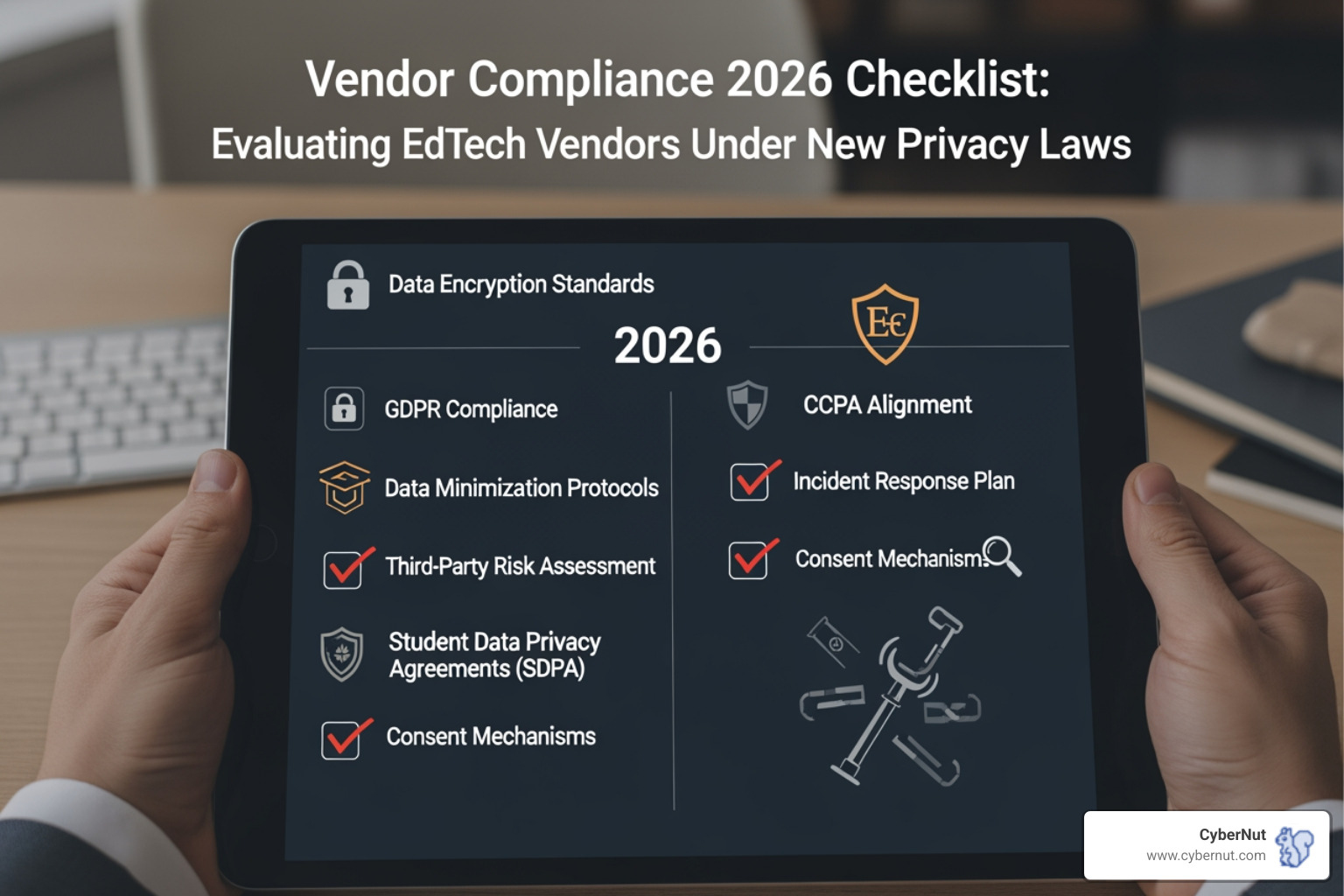
The contract is your primary defense for student data. Every agreement must clearly define how a vendor handles sensitive information. From laws like California's AB 1584, look for these 9 Mandatory Contract Clauses:
These clauses are vital. For more help, see Contract Clauses Every School Should Demand in EdTech Agreements. To understand data handling, get More info about data processing.
A vendor's privacy policy is a start, but you need proof of their security. Look for concrete evidence beyond promises.
Starting in 2026, many larger companies under CCPA will face mandatory annual cybersecurity audits, reinforcing the importance of demonstrating security. It's also wise for districts to conduct their own Cybersecurity Audits: Strengthening K-12 Schools Against Cyber Threats.
New EdTech tools bring new risks. Two areas needing extra attention are artificial intelligence (AI) and accessibility.
AI in Education is growing, raising unique privacy questions. Ask vendors about Algorithm Transparency: can they explain how their AI works? What about Training Data Bias? Was the AI trained on data that could be unfair to some students? Clarify ownership of Pupil-Generated Content created with AI tools. Understand PII Usage: will student personal information be used to improve the AI, and is that legally permissible? The Future of Privacy Forum offers a helpful Checklist to Help Schools Vet AI Tools for Legal Compliance. Staying current on these changes is vital, as discussed in Staying Ahead of the Curve: Cybersecurity in the Age of AI.
Accessibility is also crucial. Ensure the vendor's products meet WCAG 2.1 AA standards so that all students, including those with disabilities, can use the tools. Ask for reports or audits that prove their products are truly accessible to everyone.
Even with good intentions, some EdTech vendors have compliance gaps. Spotting these "red flags" early is crucial, as the cost of non-compliance for both vendors and schools can be incredibly high. A little detective work now can save significant headaches later.
This image perfectly captures the need to raise a red flag when something doesn't look right. Trust your instincts, but back them up with a thorough check using the Vendor Compliance 2026 Checklist: Evaluating EdTech Vendors Under New Privacy Laws.
When evaluating vendors, watch for these common pitfalls:
For more on securing data with third parties, see Beyond Firewalls: How to Secure Data Shared with Third-Party EdTech Vendors.
Non-compliance creates a ripple effect with devastating consequences.
For EdTech Vendors:
For Schools:
The PowerSchool data breach is a stark reminder of these risks, prompting K-12 leaders to intensify their scrutiny of vendor security, as highlighted in K-12 leaders scrutinize vendor security. For more on this topic, see Third-Party Data Breaches 101.
Compliance doesn't have to be a burden. Instead, view it as an opportunity to build trust and create stronger partnerships. By being proactive, both EdTech vendors and K-12 schools can build relationships rooted in transparency and security, working together to protect student data.
For EdTech vendors, compliance is more than a requirement—it's a powerful way to stand out.
Strong compliance becomes your competitive differentiator. You're not just selling a learning tool; you're selling peace of mind. Highlighting robust privacy and security practices can set you apart and fuel growth.
For schools, a clear plan can make evaluating vendors manageable, especially when using this Vendor Compliance 2026 Checklist: Evaluating EdTech Vendors Under New Privacy Laws.
Navigating EdTech vendor compliance can be complex. Here are clear, actionable answers to some of the most common questions to help you protect your students and school.
When reviewing a contract, focus on these must-have clauses for your Vendor Compliance 2026 Checklist: Evaluating EdTech Vendors Under New Privacy Laws:
A privacy policy is just the surface. To truly assess a vendor's security, you need to dig deeper:
If a vendor has a data breach, knowing your role is key to a swift response.
We've covered laws, contracts, and certifications, but the Vendor Compliance 2026 Checklist: Evaluating EdTech Vendors Under New Privacy Laws is about more than just avoiding fines. It's about protecting the students and families who trust us with their sensitive information.
The landscape is shifting, and by 2026, the rules will be even stricter. By approaching compliance proactively—vetting vendors, demanding clear protections, and monitoring relationships—we turn a challenge into a strategic advantage and build trust with our communities.
Ongoing vigilance is key. Vendor compliance isn't a one-time task. It requires continuous attention and a willingness to ask tough questions. The vendors who take privacy seriously will welcome this scrutiny; those who don't are not the right partners for our students.
However, technology alone is not enough. The most sophisticated firewall can't stop a staff member from clicking a malicious link. That's why building a human firewall is just as critical as any technical safeguard. When every staff member understands their role in protecting student data, the entire district becomes more resilient.
Cybersecurity awareness training doesn't have to be boring. With the right approach—automated, gamified, and designed for schools—staff will engage with the material and retain what they learn.
Want to know where your district stands right now? To understand your vulnerability to common threats, get a free phishing audit to test your staff's awareness. This simple assessment can reveal security gaps before they become real-world problems. We can't fix what we don't know is broken.
Once you've identified those gaps, the next step is building a comprehensive security culture. This includes clear policies, regular communication, and integrating privacy into every technology decision.
Ready to build a comprehensive security culture? Explore our Data Security and Privacy Plan services to protect your students and staff. We're here to help you steer this complex landscape with confidence, ensuring every EdTech partnership strengthens the safety and privacy of your students' data.
Oliver Page
Some more Insights


Back
.png)
.png)

.png)
.png)
.png)
.png)